

Leadership Advisory Expert | nxtARC Guest Contributor
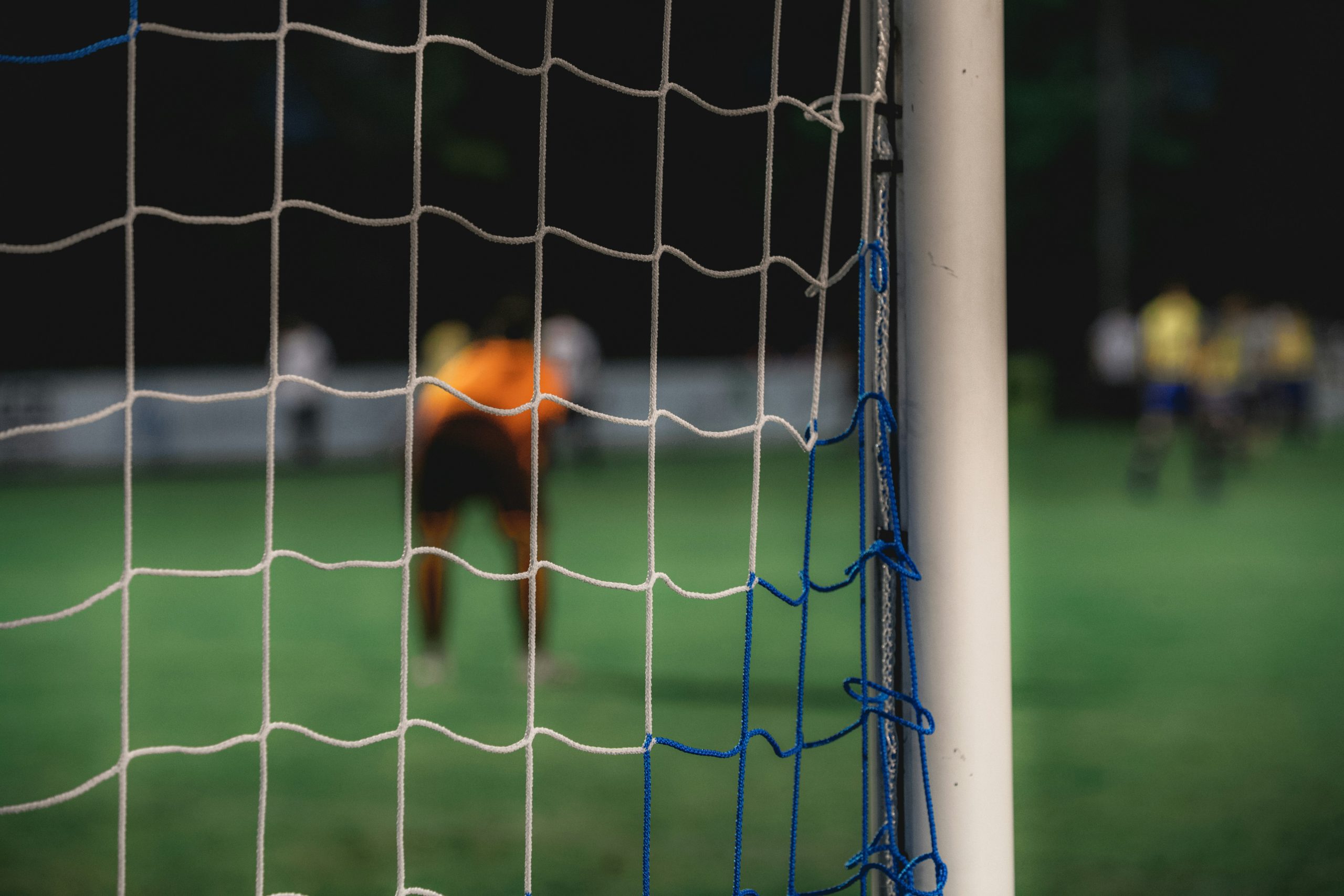
In just under four weeks, much of the world will once again be glued to their TVs, or these days, their phones, watching national teams chase the highest honour in football. And, as in every World Cup, some of the most consequential moments will not be decided in the regular ninety minutes. They will be decided in the loneliest twelve yards in football: the penalty spot.
Spare a thought for the goalkeeper.
Twelve yards away, a striker is about to hit a ball at roughly 100 km/h. The keeper has less than three-tenths of a second to react. So, before the ball is even struck, he commits…
Left.
Right.
Occasionally centre.
He guesses, while a nation holds its breath.
But here is the strange part.
In 2007, behavioural economist Michael Bar-Eli and his colleagues at Ben-Gurion University analysed 286 penalty kicks from top leagues and international competitions. They coded where each ball went, where each keeper moved, and what happened next. The numbers are unambiguous. Keepers who dive right save 12.6% of shots. Keepers who dive left save 14.2%. Keepers who stay in the centre save 33.3%.
Yet they stay in the centre only 6.3% of the time.
The other 94% fling themselves sideways, toward, on average, the wrong corner.
This is irrational, or rather, it optimizes for the wrong outcome. If you dive and the ball goes in, you went down fighting.
You did something.
You can be seen on the slow-motion replay airborne, fingers outstretched, agonizingly close. If you stand still and the ball goes in, you look like a fool who did not try. The same goal, judged differently.
Bar-Eli calls this action bias: the preference for doing something over nothing, even when nothing has the better odds. The bias is not toward effectiveness. It is toward visible effort. We reward motion more readily than judgment.
Now look around your office: The CEO who announces a restructuring because the share price slipped. The product manager who ships a feature because the sprint demanded one. The doctor who prescribes the antibiotic for a viral infection because the patient came in expecting one. The manager who called the meeting you are sitting in.
Why, again, are you here?
The pattern is not anecdotal. Berkeley’s Ulrike Malmendier and her co-author Geoffrey Tate have shown that overconfident CEOs systematically destroy value through acquisitions. They buy more, pay more, and the market punishes them on announcement. A 2017 paper in the Journal of Evaluation in Clinical Practice estimates that roughly 30% of medical interventions are over or under treatment, with the bias skewing toward “do something.” In Harvard Business Review, Adam Waytz reports that when asked “How are you?”, about eight in ten people now answer “busy.” Busy has become a synonym for good.
Many organizations unintentionally reinforce this dynamic, rewarding visible intervention more consistently than thoughtful restraint.
Tech firms gave this instinct a more flattering name: bias for action. Then they elevated it into a corporate virtue. But the goalkeeper data should give us pause. Bias for action is not necessarily a leadership principle. It is, first, a deeply human reflex, wired long before there were quarterly earnings calls or performance reviews.
Evolutionary biologists call this error management. When our ancestors heard a rustle in the grass, the cost of running from a stick was a moment of embarrassment. The cost of standing still in front of a snake was death. Asymmetric costs produce asymmetric instincts. We are descended from the ones who flinched. Standing still has never felt safe.
A word of fairness. Some economists argue the goalkeeper’s situation is game theoretic, not parametric. If every keeper stayed centre, kickers would simply aim for the corners, and the edge would disappear. That is true. Patience is not a magic strategy. It works precisely because most people are not patient.
And patience is not the same as passivity: The goalkeeper who stays centre is doing something extraordinarily hard: reading the kicker, resisting instinct, holding nerve in front of eighty thousand people. Patience is the discipline of resisting action when action would feel emotionally safer. It is not laziness rather, it is an active, costly choice made in full view of people who will judge you if it does not work.
So what follows for leaders?
If you lead anything, a team, a company, a household, or even yourself, three things matter.
- First, reward discernment, not activity.
If your culture celebrates the colleague who “took initiative” regardless of whether the initiative improved anything, you are subsidizing action bias. Ask what changed, not who appeared busiest. - Second, make thoughtful restraint visible.
Goalkeepers dive because standing still has no story. The leader who chose not to acquire, not to reorganize, not to launch often receives none of the credit for the disaster avoided. Unless restraint itself becomes legible, action will always feel safer. - Third, distinguish patience from passivity.
Patience requires you to absorb the criticism of people who confuse motion with progress. It requires you to say, in a room full of anxious people, “I think we should wait.” Then remain steady while everyone wonders whether you are failing to lead.
It may be one of the hardest disciplines in leadership. It is also, by the numbers, the right thing roughly a third of the time.
The World Cup will give you several chances to watch it unfold in real time, with millions of dollars and national pride at stake. The keepers who stay in the centre will be ridiculed when it works, dismissed as lucky, and crucified when it fails, dismissed as lazy. The ones who dive will be applauded either way.
Leadership is often judged by visibility. Wisdom rarely is.
Now imagine that goal is your boardroom.